Optimal solutions for mobility networks
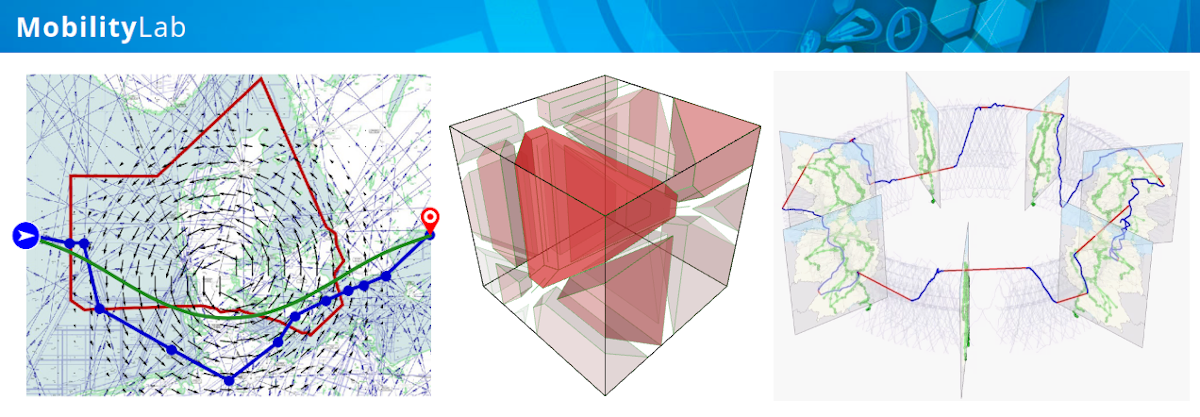
The mobility of the future consists of networked systems for which data analysis and intelligent control are indispensable. Since such systems are highly complex, their planning and control requires the use of tailored data-driven methods of mathematical optimization and artificial intelligence. The MobilityLab is driving innovations in close cooperation with industry partners by developing efficient solution methods for mathematical key problems. The general approach is the identification and exploitation of specific problem structures that ideally transfer to other applications, even outside of the area of traffic optimization.
Projects
In the third phase of the Research Campus MODAL, the MobilityLab is working on three projects with leading industrial partners: with DB InfraGO AG on automated railway disposition assistance, with IVU Traffic Technologies AG on real-time disposition for railway operators, and with Ab Ovo Deutschland GmbH on capacity management in rail freight transport.
Automated Railway Disposition Assistance
Delays, disturbances, and disruptions are ubiquitous in rail traffic, have a large impact on the performance of the railway system, but are nevertheless still managed by hand. With DB Infra GO AG, Germany's largest railway infrastructure manager, we develop an automated optimization tool for real-time disposition that supports control centers in finding wise dispatching decisions. This combines combinatorial optimization, machine learning, and gamification-style visualization pipelines.
Real-Time Disposition for Railway Operators
Using mathematical optimization for planning rolling stock and crew has become an industry standard in public transport. However, daily operations usually require multiple changes to the planned schedules, which are still subject to manual management. In cooperation with IVU Traffic Technologies AG, we aim for designing real-time disposition algorithms for railway operators. Based on our experience in vehicle scheduling gained in the two preceding phases of MODAL, we build abstract disposition scenarios, and pursue a continuous optimization path with frequent reoptimization.
Capacity Management in Rail Freight Transport
While shifting freight traffic to rail is desired for many reasons, e.g., economic efficiency and environmental aspects, railway operators face a large variety of bottlenecks in the practical implementation. Together with Ab Ovo, we develop methods for formalizing, assessing, and extending capacity from the standpoint of rail freight operators, integrating the availability of infrastructure, rolling stock, and crew. To cope with such a highly integrated problem, we foster optimization-and-simulation, decomposition, and hierarchical methods.
Past Projects
In the second phase of the Research Campus MODAL, the MobilityLab has driven forward structural insights and algorithmic techniques for three network optimization applications:
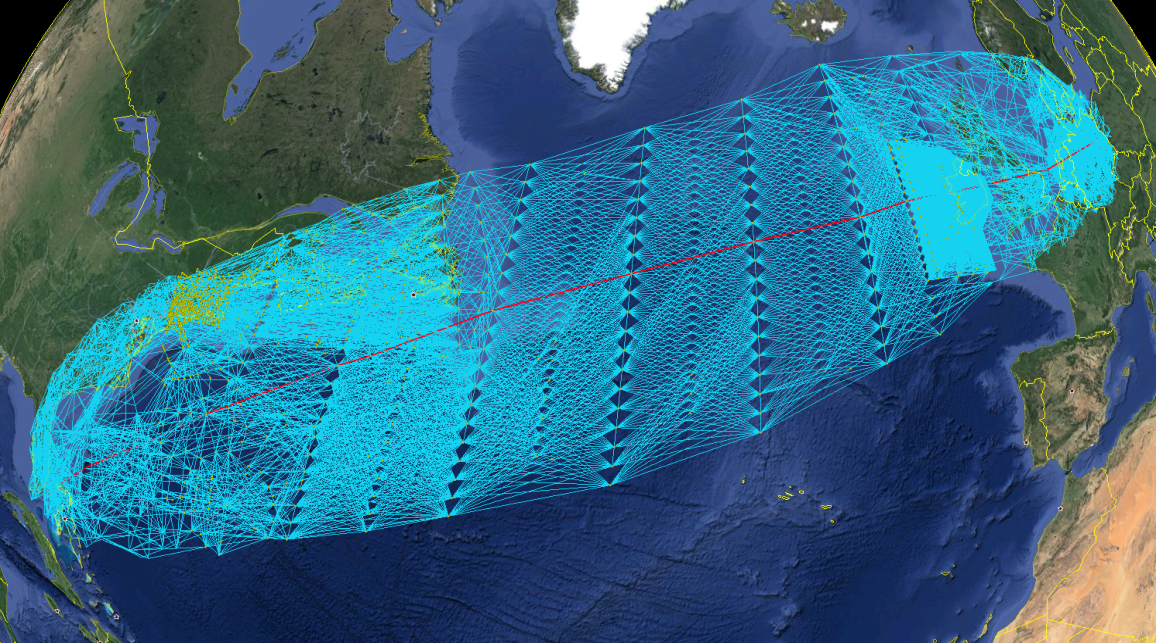 | Flight Trajectory Optimization on Airway NetworksTogether with our partner Lufthansa Systems AG, we have developed industry-ready algorithms for planning optimal 3D aircraft routes. Our new multi-objective Dijkstra algorithm (MDA) outperforms existing approaches in terms of complexity and incorporates, e.g., travel time, fuel consumption, weather conditions and overflight costs. More over, our logic-based branch-and-bound procedure can effectively handle air traffic restrictions. (Read more) |
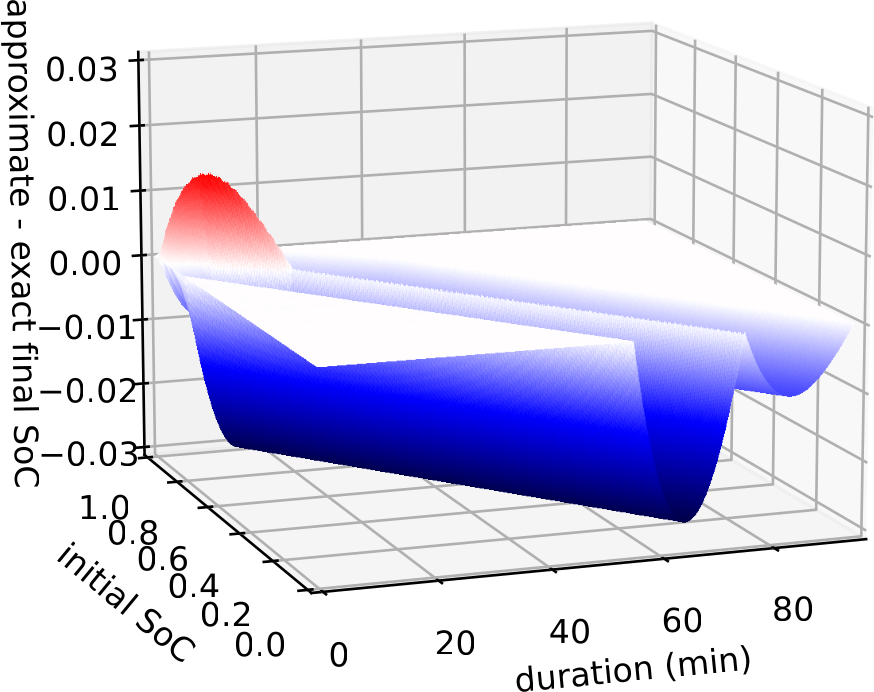 | Electric Bus SchedulingThe electrification of the fleet of bus operators imposes new challenges on how to optimally schedule vehicles. In cooperation with IVU Traffic Technologies AG, we have extended bundle methods for multi-commodity flow problems so that they can deal with large and mixed - electric and diesel-powered - fleets and take into account the non-linear behavior of the battery state-of-charge. (Read more) |
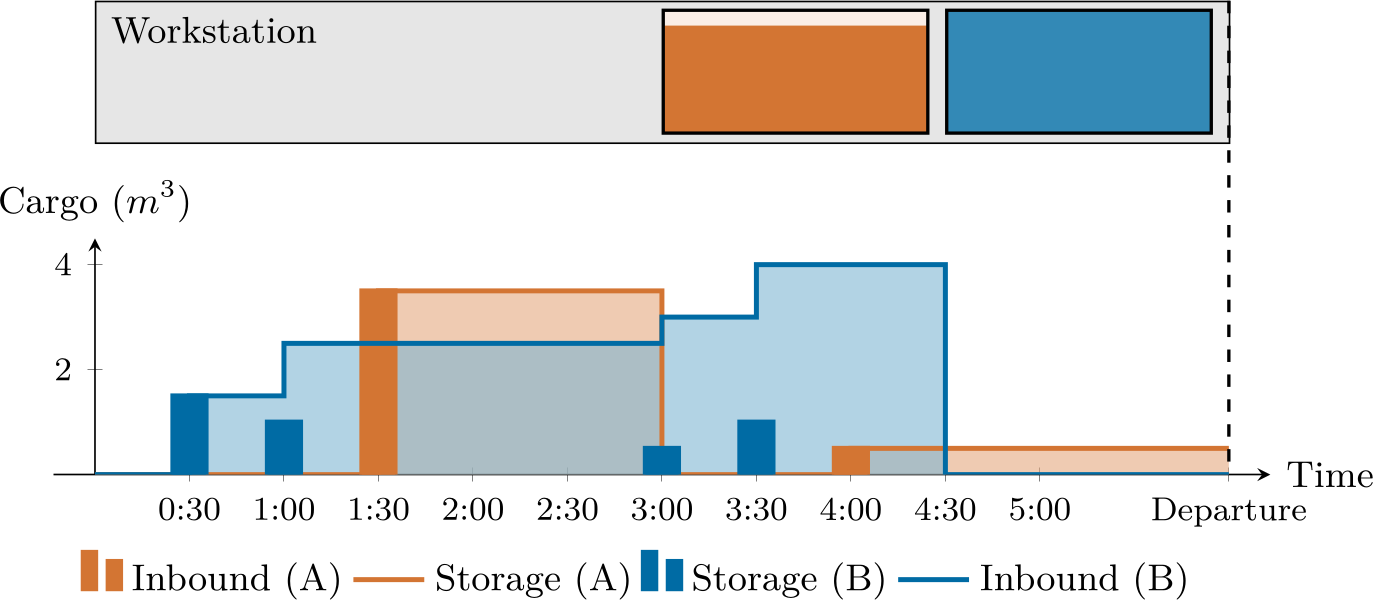 | Air Cargo Ground HandlingCargo handling is a major logistic challenge for airport operators. Typically, freight is organized in unit load devices (ULDs) that need to be assembled, disassembled and reorganized - coping with delayed incoming containers and without missing the right departure. For the break-down scheduling of ULDs, that we consider together with our industry partner Ab Ovo, our tailored logic-based Benders decomposition heuristic does not only reduce delays, but also reveals capacity bottlenecks. (Read more) |